
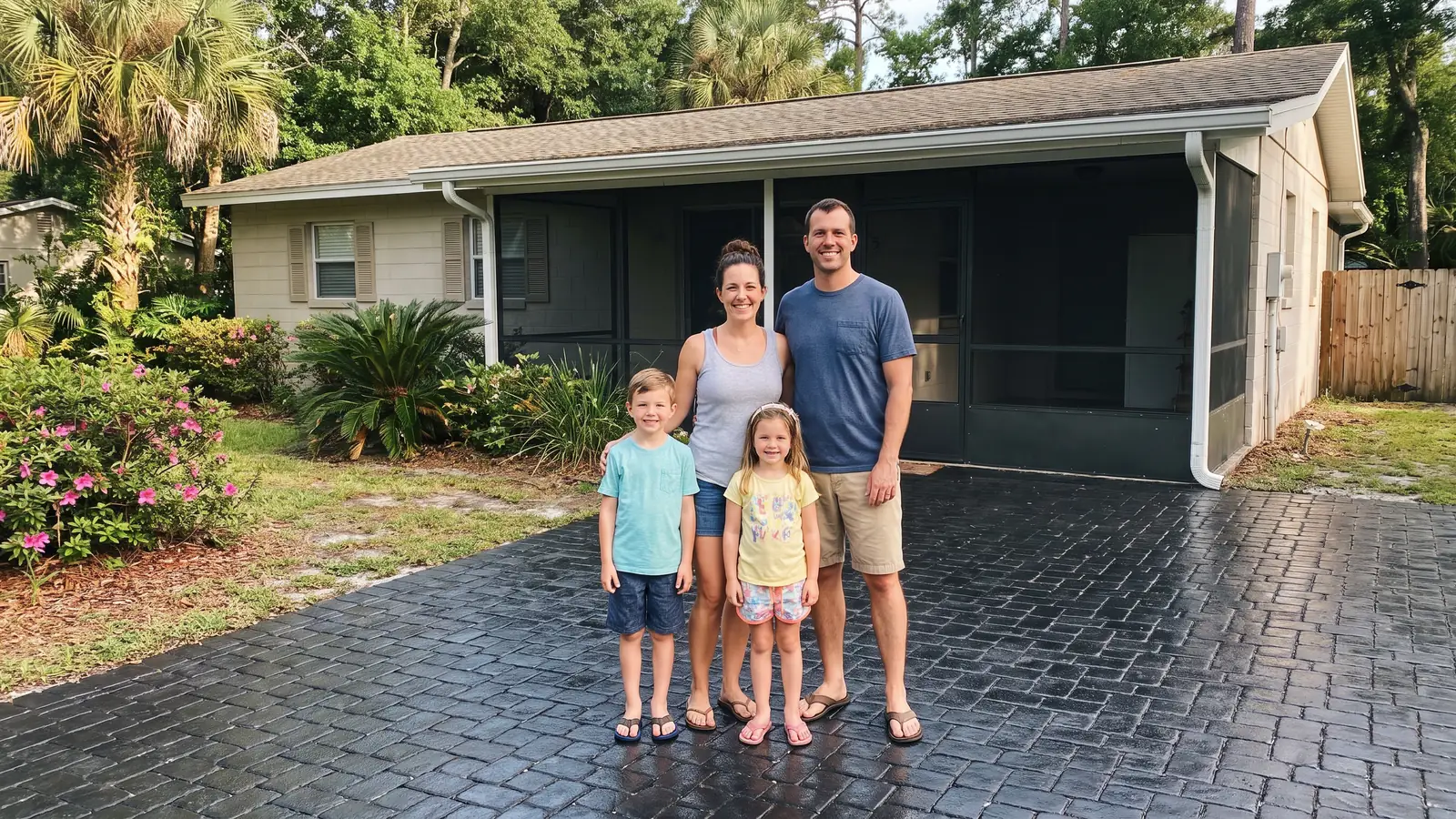
Paver sealing for Ortega homes
Paver Sealing in Ortega, FL
Ortega pavers shaded by live oaks can look fresh again, so call (904) 593-3709 for a free estimate.
- Brings out deeper paver color
- Fresh joint sand helps lock pavers in place
- Gives weeds less room to grow
- Makes the surface easier to keep clean
- Free estimate, no obligation
Request a Free Estimate
Free, no obligation.
Fast, careful paver sealing in Ortega
Ortega pavers, from the old walks east of Roosevelt Boulevard to the driveways of Ortega Forest, can be sealed by a local contractor, with a free estimate first. Use book a free estimate and you get a reply inside 1 business day, and usually far sooner. Say which side of the boulevard you are on, because homes and trees differ.
Look at the front walk. Pavers may be gray under live oak, with a few tilted where a root pushed through. A wash, fresh sand and a new coat settle the color back to one tone. Call (904) 593-3709 if you would like to talk through what you see.
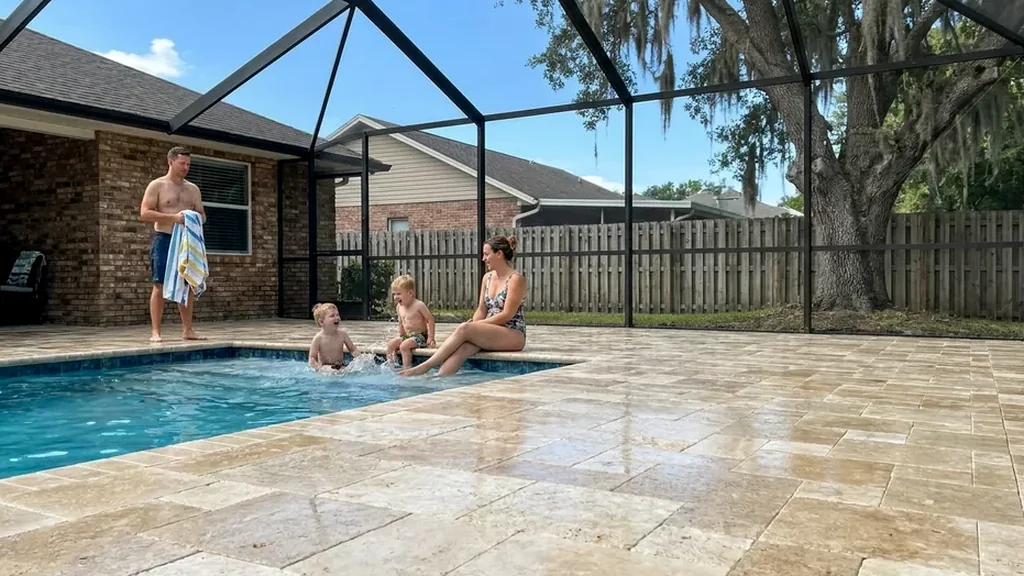
Why hire a local paver sealing contractor in Ortega?
Ortega is a peninsula of old oaks, historic homes and river air, and each of those changes how paver work should go. A local contractor expects them, so book a free estimate and ask how they apply to your street.
Quote first, decide later
Your Ortega pavers get looked at before any price is named. Saying yes is optional.
A yardstick for bids
Wash, sand and seal runs $1.75 to $3.25 per square foot in published Jacksonville prices. Ask each bidder where theirs sits.
Roots on the radar
Live oak roots can lift driveways and patios. Tilted pavers get flagged so they can be fixed before the coat.
Sheen to suit the house
Matte sits quietly by brick, stone or Tudor trim. Wet look adds depth to the color, though scuffs appear sooner.
Get Your Free Estimate in Ortega
Tell us about your pavers in Ortega.
Free, no obligation
What paver problems show up most in Ortega?
Oak roots that lift pavers
University of Florida extension reports that a mature live oak reaches 60 to 100 feet across and that its roots can heave sidewalks, driveways and patios. Ortega has Bettes Park, Seminole Park and Yerkes Park wrapped in old oaks, and many yards share that canopy. A lifted paver holds water and breaks the sealed surface. Sealing over a tilt only preserves it, so repairs come before the coat. Roots do not announce themselves, so a ripple in the walk is often the first sign. Photos of any ripples help the contractor plan. Roots grow slowly, so a small ripple now can become a large tilt in a few years.
Acorn stains and green shade
Water oak acorns leave stains on asphalt and concrete, UF/IFAS notes. Beneath a canopy, pavers also stay damp, and moss and algae show up where shade is heavy. Treatments have limited value where pavers stay wet and shaded. If your Ortega walk sits under oaks, expect dark spots and a green film at the edges. The marks look like dirt, but they are stains, and they do not rinse off by themselves. They need to be lifted during the wash, before any sealer goes down. Raking leaves from the surface keeps it from staying wet.
Sand that drains away fast
The USDA Ortega soil series, first described in Duval County, is fine sand more than 80 inches deep with rapid permeability. Rain adds up to about 52 inches a year, with May to September the wettest stretch. Heavy rain can wash joint sand out, so open joints and weeds follow. The ground beneath your pavers drains quickly, which means the joint sand has little to hold it. A walk that has not been re-sanded in a few wet summers is the usual place to find a gap you can slip a finger into. A gap you can slip a finger into means the joint needs sand soon.
Salt and tide in the river air
Ortega sits on a peninsula, and tides have a strong effect on the St. Johns near Jacksonville, where the river is an estuary open to the ocean. That brings damp mornings and slow drying. A shaded patio close to the water can take a day longer to dry. Sealer needs a dry surface, so this can shift your date. Moss and lichens should not grow on interlocking concrete pavers unless the area is heavily shaded, which tells you how damp your spot is. Wait for a clear stretch of weather before booking.
Unknown coats on older patios
Old Ortega was added to the National Register of Historic Places in 2004, and its homes span eight styles, but pavers were added by later owners. A water-based product is not able to cover a solvent-based one. One Jacksonville company says it strips an oil-based coat first on about 10 to 20 percent of its projects. If your coat is peeling, the old product matters. Receipts, an old invoice or a neighbor with the same patio can settle the question. A neighbor's patio from the same builder may share the same coat.
Does it matter which part of Ortega my house is in?
Yes, since Ortega was once an island and the land bridge that joined it became Roosevelt Boulevard. East of the boulevard lies Old Ortega, with more than 95 percent of its buildings first built as single-family homes. West of it is Ortega Forest, which has newer development. Tell the contractor your side when you book a free estimate.
Old Ortega homes come in Craftsman Bungalow, Mission, Mediterranean Revival, Colonial Revival, Tudor Revival and Prairie styles, among others. Pavers beside stone, brick or old wood need careful rinse water. Venetia, planned in 1925 and never completed, has gates at Yacht Club Road and Ortega Boulevard. Call (904) 593-3709 and say whether your house is brick, stone or wood.
Should your address lie in a historic district, the city wants a Certificate of Appropriateness before exterior work. The city lists driveways as an example. Once approved, the certificate is valid for 1 year, and for 5 years after work begins. Check the Land Development Map for your address, then book a free estimate when you know what applies.
What does paver sealing cost in Ortega?
Published Jacksonville prices sit between $1.75 and $3.25 per square foot to clean, sand and seal, and in Ortega shade growth, tilted pavers and old sealer push a job toward the upper end. A failed coat has to be stripped first at a higher price. To see where your lot lands, book a free estimate.
Courtyards behind older homes cost more per foot because gear gets carried in by hand, and a Jacksonville pricing guide says small projects run higher in general. Long driveways in Ortega Forest are easier to price. Call (904) 593-3709 and the contractor can tell you which fits.
| Paved area | Typical example | Clean, sand and seal |
|---|---|---|
| 300 sq ft | Small patio or walkway | $525 to $975 |
| 600 sq ft | Two car driveway | $1,050 to $1,950 |
| 1,000 sq ft | Large driveway or pool deck | $1,750 to $3,250 |
| 1,500 sq ft | Driveway plus pool deck | $2,625 to $4,875 |
Math based on the $1.75 to $3.25 per square foot that Northeast Florida paver companies publish. Your contractor sets the actual price after seeing the surface. Repairs, leveling and stripping failed sealer are usually extra.
How does a paver sealing job work in Ortega?
Walk under the trees with the contractor
The contractor checks where oak shade falls, which pavers have tilted and whether an old coat is present. Lifted sections get marked for repair, since sealing preserves any dip. If a coat exists, its type decides what can follow. Mention any historic-district paperwork you hold. A few photos sent ahead help the contractor plan the visit. Notes about roots and tilted pavers go into the quote now.
Wash away acorn stain and green film
Moss, algae, acorn marks and weeds come off in the wash. Because a trade supplier warns that more than 3,000 PSI can strip standard concrete pavers, the pressure stays moderate. Wet rinse water near old brick, stone and wood gets managed. Whatever is left under the sealer remains there. Shaded corners under the canopy often need a second pass. Any rust or oil marks are treated while the surface is open.
Refill the joints and sweep
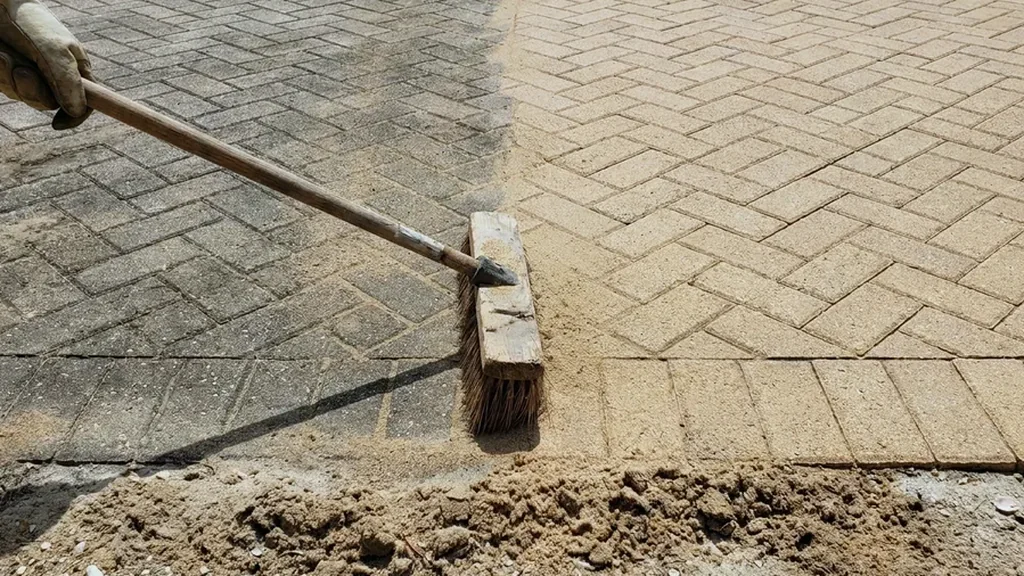
Washing takes joint sand out, so new sand goes in. In Ortega the sandy ground drains fast, and open joints invite weeds. The joints get filled until they are tight and the surface is swept clean. Tilted sections that were repaired get extra attention here. Sealed joint sand stabilizes the stones and discourages weeds, so this step supports everything after it. Tilted sections that were reset get extra sand.
Let river air and shade dry out
A technical bulletin from one sealer maker says most of its sealers need the surface to dry 24 hours after cleaning or rain. Oak shade and river air can slow that. A careful contractor will wait rather than seal a damp walk. The same bulletin says most of its sealers need 24 hours of dry weather after application to cure. Shade under the canopy can add a full day.
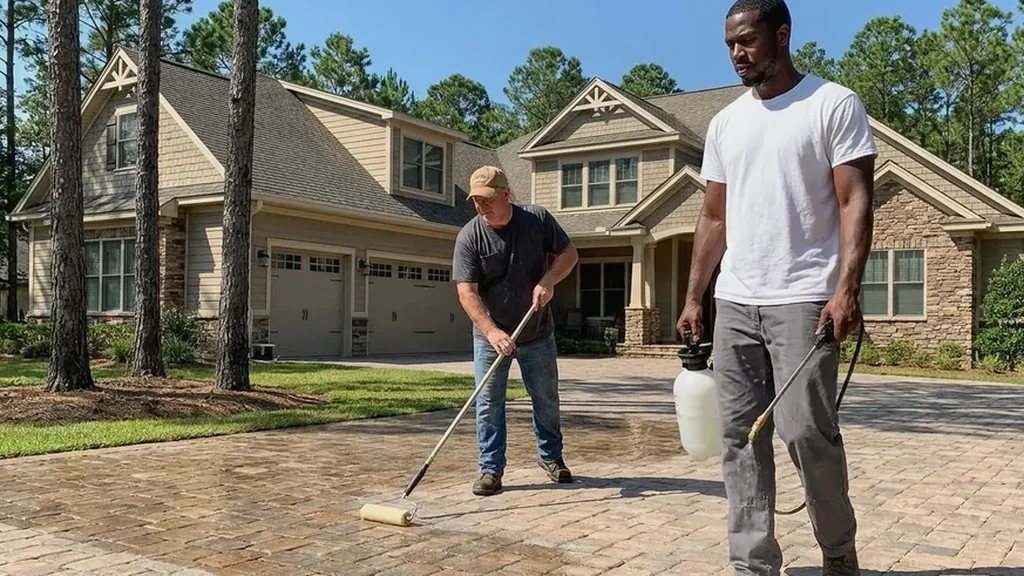
Spray, back-roll and keep off it
Spray and back roll is the method one trade bulletin recommends for most sealers, and extra sealer left to dry can cloud the surface. The contractor lays your chosen finish on in an even coat. Keep cars off for the time the product requires, often about a day. Write down the product name for later. A short list of first-day rules is worth asking for.
Complete paver services in Ortega
Ortega jobs run wash, sand, dry, seal. The wash lifts oak stain and green film, and fresh sand then locks the pavers in place. Sealer goes last, so nothing is buried. Call (904) 593-3709 for the time each step takes.
Front walks to old porches, drives under oaks, courtyards by brick or stone and patios near the water are typical surfaces. Shaded walks go green first, and open drives show tire wear. Courtyards by old masonry get gentle rinse water. Describe yours when you book a free estimate.
Choosing sealer starts with water-based versus solvent-based, and a coat left by an earlier owner can settle that for you. An acrylic film stays on top and holds the joint sand, and a penetrating product goes into the paver instead. Beside a Tudor or Colonial front, matte keeps the color natural. Call (904) 593-3709 to talk it over.
Afternoon storms can wipe out a sealing day from May to September. Spring and fall often give steadier weather, according to one Jacksonville company, and deep-shade courtyards may need an extra drying day. To choose a date, book a free estimate and ask how delays are handled.
Questions to ask before you hire
- Do you treat the weeds that grow up through the joints before sanding?
- Does the quote include a second pass on spots that still look stained after the first wash?
- Can you work around a gate, a dog run or a car I cannot move that day?
- How do you tell whether my pavers need a reseal or a full strip first?
- Will you cover my pool cage screens and the plants along the walkway?
- Do you seal pavers with a wet look finish, or only a natural matte one?
- What does the sealer do to water that pools on a low spot in my driveway?
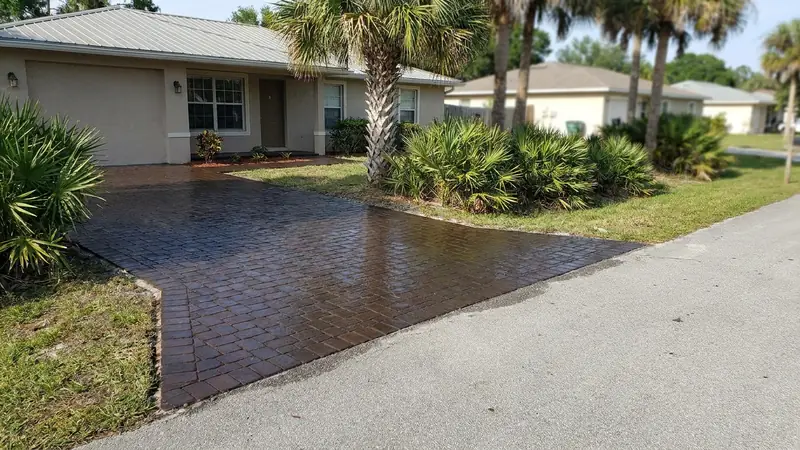
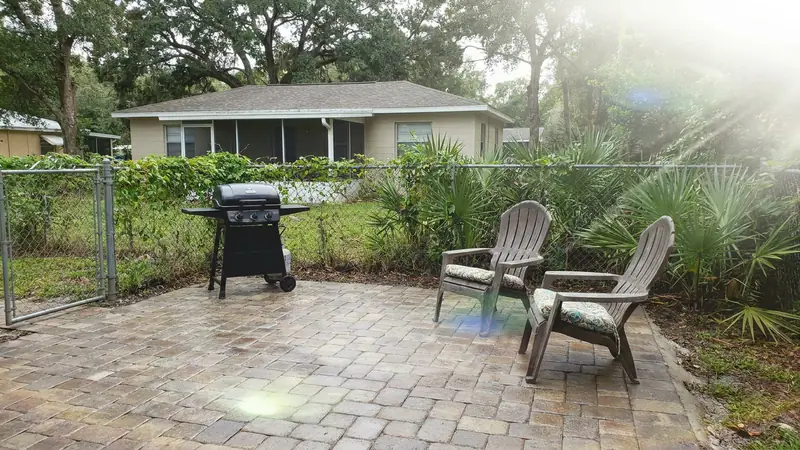
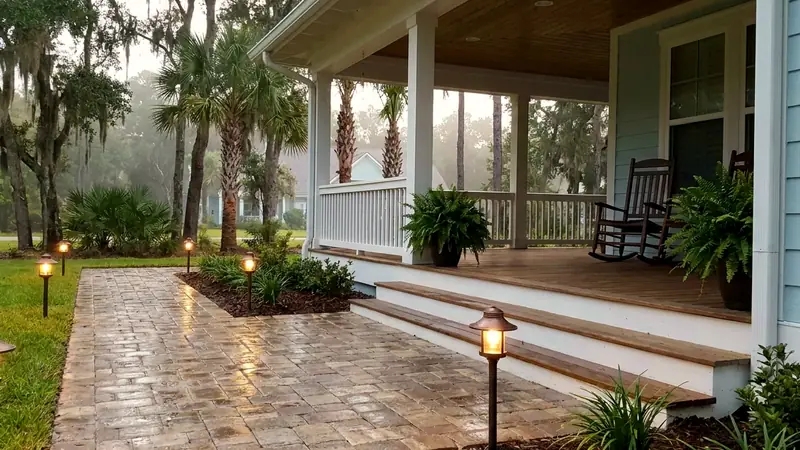
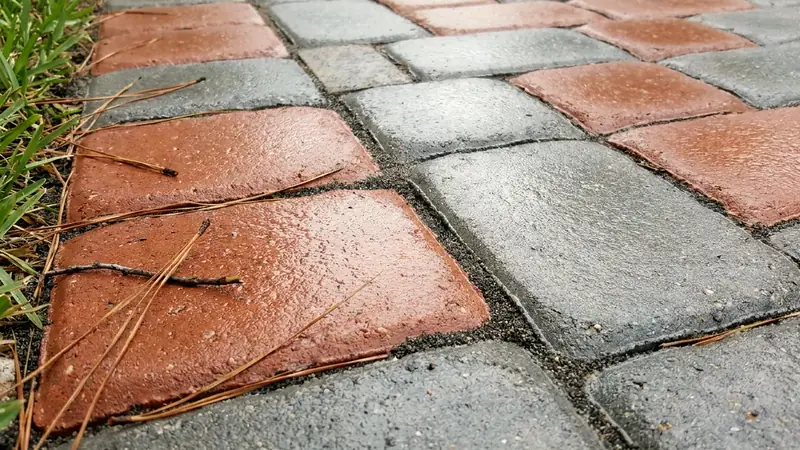
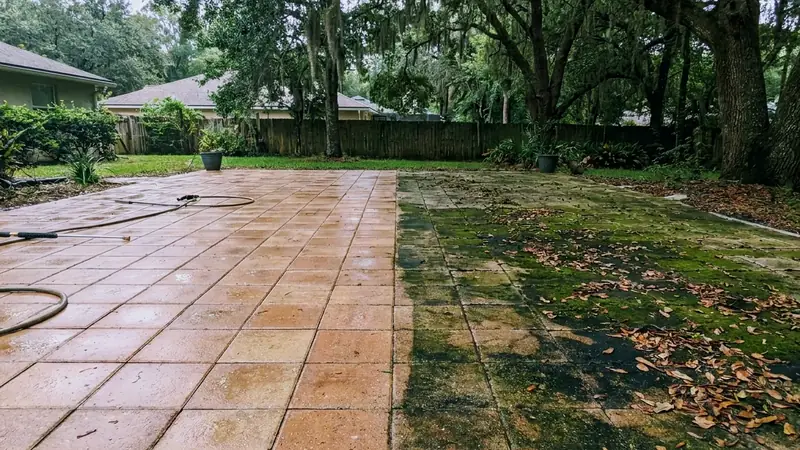
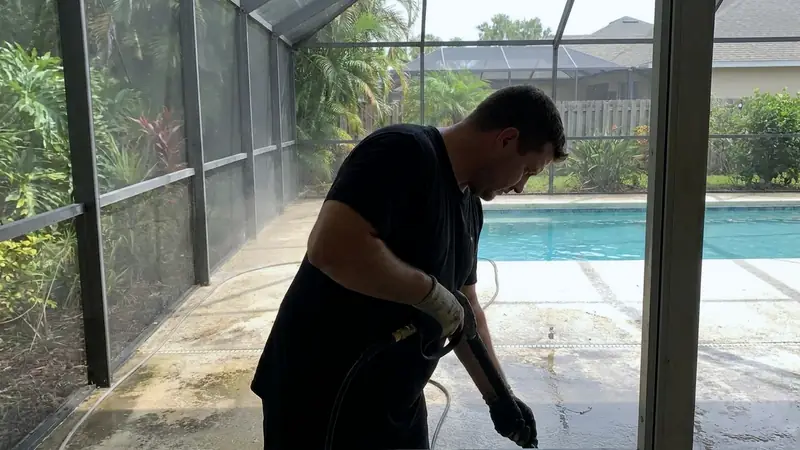
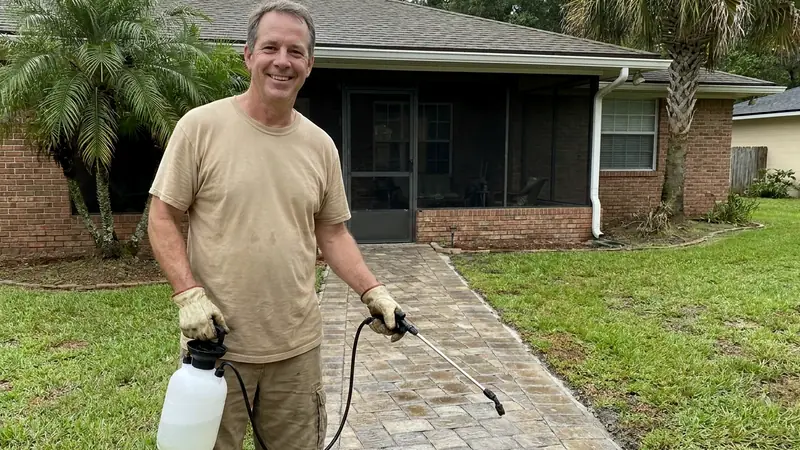
What do sealed pavers look like around Ortega?
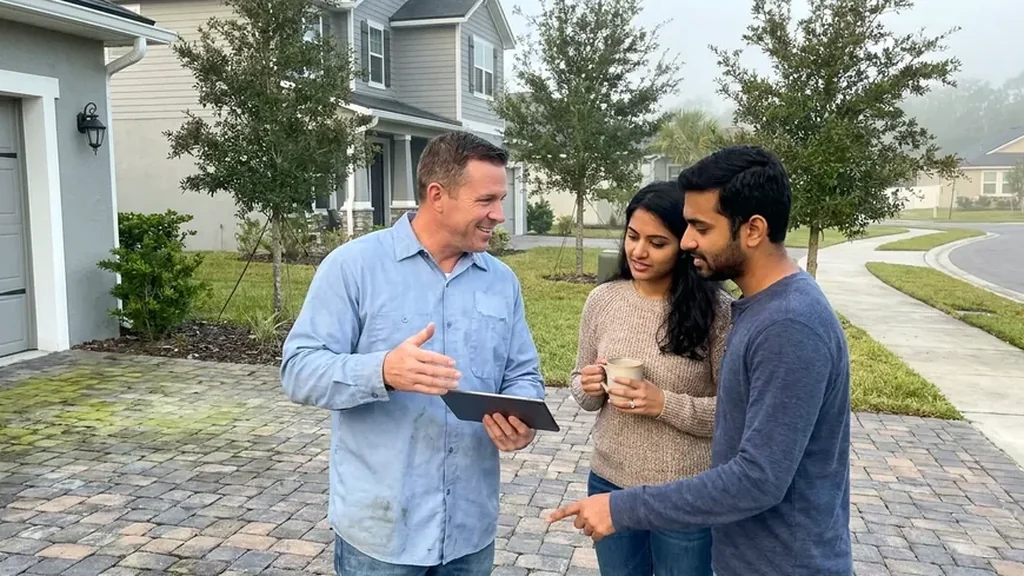
Why local matters in Ortega
Look up first, because Ortega's oaks decide the job. Limbs control shade, shade controls drying time, and roots may have nudged pavers out of line. A contractor from a new subdivision may skip that check. To reach a local contractor, call (904) 593-3709.
Old frame houses, masonry and Mission fronts sit side by side here. Each takes rinse water differently, so a contractor who knows the peninsula keeps spray off siding and mortar. Ask how that is handled when you book a free estimate.
River tides, quick summer storms and deep shade all slow drying. A local contractor builds that into the calendar, which spares you damp, hazy pavers. Send a few photos when you book a free estimate, with no obligation to hire.
What is worth knowing about Ortega before hiring a contractor?
Ortega was laid out as a streetcar suburb in 1909 by the Ortega Company, with plans by Henry J. Klutho, and it has four circular parks and streets that run out to the water. Bettes Park is round and ringed with oaks, and Cortez Park sits near Ortega Village at Corinthian Avenue. If you live near one of those parks, book a free estimate.
A wooden bridge connected Ortega to Avondale in 1908, and the Ortega River Bridge replaced it in 1927. The Florida Yacht Club's clubhouse dates to 1928, and Timuquana Country Club sits close by. Stockton Park sits on the St. Johns, while the docks at Seminole Park reach into the Ortega River. For a quote near any of them, call (904) 593-3709.
Frequently Asked Questions
Is it good to seal pavers in Ortega?
Yes, in most cases. The sealer locks joint sand in place and slows sun fade, and shaded Ortega walks clean up more easily afterward. Tilted pavers still need fixing before the coat goes on.
Why is paver sealing so expensive in Ortega?
Prep takes the longest. A Jacksonville paver company puts it at 2 to 3 hours of preparation per hour of sealing, covering the wash, joint sand and drying. A failed old coat means one more step, stripping.
What paver sealer fits an Ortega home?
It depends on what is already on the pavers. Because the two families do not stack, the old coat comes first. After that, choose a finish: matte for a natural look, or a wet look for deeper color that shows scuffs sooner. Keep the product name on file for the next recoat.
Is there a pressure washing business that seals pavers in Ortega?
Yes, many Jacksonville companies do both. Washing alone fixes the look for a few months, one local company says. Sealing is what protects the surface afterward, so ask whether washing, sand and sealing are quoted together. Some firms also offer pressure washing as a separate service. The estimate itself is free.
Can oak roots damage my Ortega pavers?
They can. Oak roots can raise driveways and patios, per University of Florida extension, and a mature live oak spreads 60 to 100 feet. Lifted sections should be repaired before sealing, since sealer preserves the tilt. Roots grow slowly, so a small tilt today may be larger in a few years.
Do I need approval to seal pavers in Old Ortega?
Possibly. Exterior work in a historic district needs a Certificate of Appropriateness, and the city gives driveways as an example. The city page does not mention sealing, so check the Land Development Map and ask city staff before booking. Once a certificate is approved, it is valid for 1 year, and for 5 years after work begins.
How much does it cost to seal pavers per square foot in Ortega?
Published prices run $1.75 to $3.25 per square foot around Jacksonville to clean, sand and seal. Strip-and-reseal costs more. Get the area and the rate written down. Where you land in that range depends on shade, old sealer and lost joint sand. The estimate itself is free.
How long do paver sealers last in Ortega?
Plan on two to five years, and toward the short end if you have deep oak shade or daily tire traffic. A splash test helps: water that soaks in means the coat is done.
What if my old coat is peeling or cloudy?
Tell the contractor at the estimate. Peeling or cloudy sealer may be a solvent-based or oil-based product that has to be stripped first. A Jacksonville company puts that at about 10 to 20 percent of its projects. A contractor can tell by testing a small area.
Does sealing stop weeds between my Ortega pavers?
It slows them a lot. Sealer that stabilizes the joint sand closes the gaps where soil collects. Seeds can still root in dirt on the surface, so sweeping now and then helps.
Should I fix tilted pavers before sealing?
Yes. One Jacksonville company says sealing preserves any sunken or lifted section, so those areas should be repaired first. Point out tilted spots at the estimate so the contractor can plan the repair and the sealing together.
Ready for a Free Estimate in Ortega?
Call (904) 593-3709 and tell us about your pavers.
Free, no obligation